Sizing
What Size Dumpster Do I Need? A Fayetteville Guide
Quick answer: a 20 yard fits most Fayetteville remodels and cleanouts. How to pick between 10, 15, 20, 30 and 40 yards by volume, weight and space.
Read the guideGuidelines · 7 min read
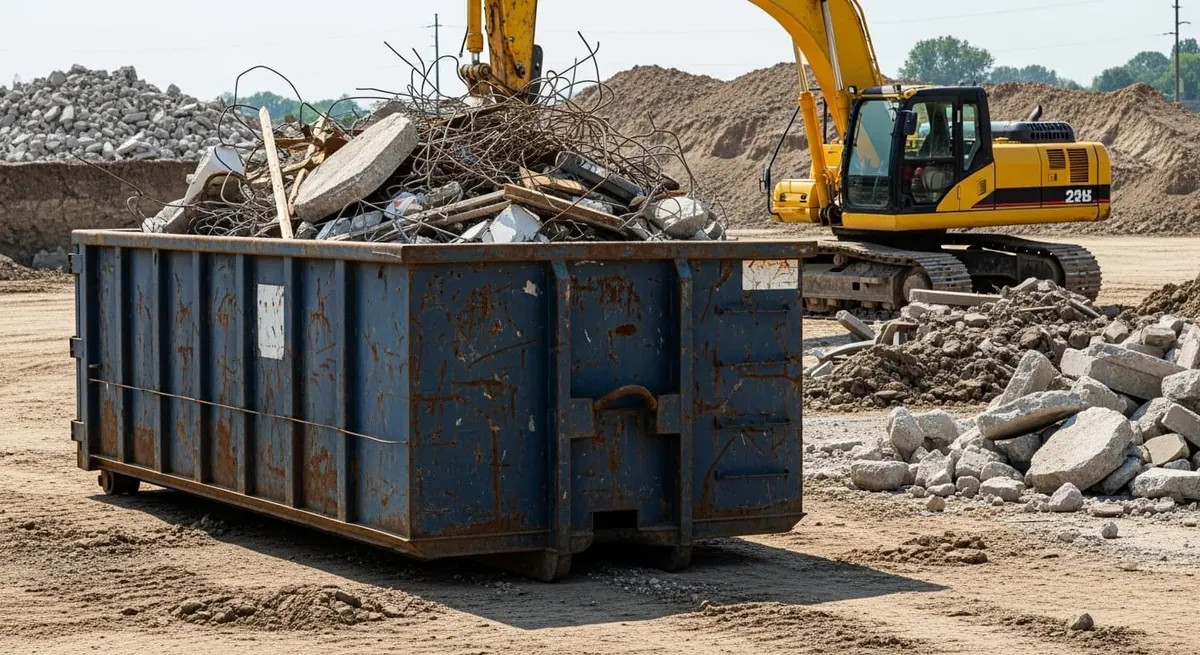
Most of what comes out of a house or a job site can go in a roll-off. The exceptions are the things North Carolina bans from landfills or the landfills must refuse — and each of them has somewhere to go instead.
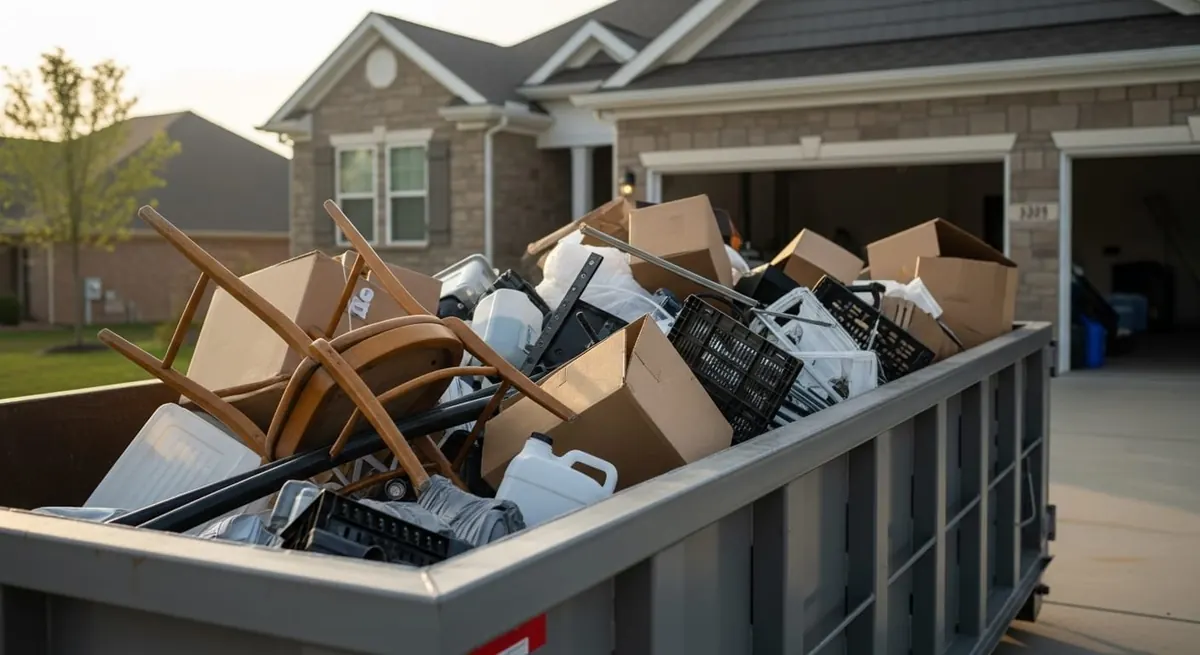
Cumberland County's Ann Street Landfill lists ceiling and ceramic tile, fiberglass tubs and sinks, countertops, glass, siding, PVC pipe, sheetrock, paneling, plywood, painted and treated wood, vinyl flooring, metal and dirty shingles among the materials its construction and demolition area accepts. The County's hazardous waste center does not take drywall mud, caulk or glue — it says they go to the construction and demolition landfill.
G.S. 130A-309.10(f) opens: "No person shall knowingly dispose of the following solid wastes in landfills." These are the reasons behind most of the no list:
| Item | The rule | Where it goes |
|---|---|---|
| Used oil and oil filters | (f)(2) used oil and (f)(10) motor vehicle oil filters | Out of the box — ask us |
| Antifreeze | (f)(5) antifreeze (ethylene glycol) | Cumberland County household hazardous waste center (below) |
| Yard trash | (f)(3) — except at landfills approved for it | A yard waste load, or the County's Wilkes Road facility |
| White goods (appliances) | (f)(4); G.S. 130A-309.81(b): "A white good may not be disposed of in a landfill" | Ann Street white goods area or a County container site |
| Aluminum cans, recyclable plastic bottles | (f)(6) and (f)(11) | Recycling bin |
| Whole scrap tires | (f)(7); G.S. 130A-309.58(b): "Landfilling of whole scrap tires is prohibited" | Ann Street tire area |
| Lead-acid batteries | (f)(8); G.S. 130A-309.70: civil penalty of up to $50 per battery | Out of the box — ask us |
| Wooden pallets | (f)(12) — allowed only at landfills permitted for construction and demolition debris alone | Wilkes Road takes clean pallets |
| Oyster shells | (f)(13) | Out of the box |
| Computer equipment and TVs | (f)(14) computer equipment and (f)(15) televisions | Ann Street Recycling Center or a County container site |
| Lithium-ion batteries | (f)(16), effective December 1, 2026 | Out of the box — ask us |
Two more are banned from unlined landfills, including unlined construction and demolition landfills: fluorescent lights and mercury thermostats under G.S. 130A-309.10(m), and from December 1, 2026, solar panels under (n). The statute also says the accidental or occasional disposal of small amounts is not a violation — but the landfill will still turn a load away for them.
Most renovation and demolition loads go to a construction and demolition landfill, and 15A NCAC 13B .0542(e) lists what those must refuse: containers such as drums, tanks, cans and bottles unless they are empty and punctured; garbage; hazardous waste; liquid waste; medical waste; household trash; PCB waste; white goods; and yard trash. Loose lamps and bulbs, light ballasts and fixtures, thermostats and light switches, batteries — including those from exit lights and smoke detectors — lead pipe and roof flashing, transformers, and wood treated with CCA or creosote are refused when they arrive separately from the rest of the load. On top of that, we do not accept paint, solvents or automotive fluids, propane tanks or fuel containers, asbestos, hazardous chemicals or medical waste. If you are unsure about something, call (910) 672-8396 before you toss it in — it is far cheaper than finding out at the gate.
| Item | Where it goes |
|---|---|
| Oil-based paint, stains, solvents, pesticides, antifreeze | Cumberland County Household Hazardous Waste Center, 923 Wilkes Road — free, for Cumberland County homeowners only, second Saturday of the month 8 a.m. to noon and fourth Wednesday noon to 4 p.m., up to 10 gallons or 80 pounds a visit. No businesses; residents of Spring Lake, Fort Bragg and neighboring counties cannot use it. |
| Latex paint | Not taken at the hazardous waste center. The County says to add kitty litter, sand or dirt until it no longer flows, then put the open can in a bag in your household trash. |
| Fluorescent bulbs | The hazardous waste center, five a day from households |
| TVs, computers and anything with a cord | Ann Street Recycling Center or any County container site; TVs over 27 inches go to the Ann Street Landfill |
| Tires | Ann Street tire area — homeowners up to 5 a year free; County container sites take up to 5 tires without rims per household a year |
| Fridges, freezers, washers, stoves, AC units | Ann Street white goods area or any County container site; fridges and freezers empty, doors removed |
| Branches, leaves and clippings | A separate yard waste dumpster, or the Wilkes Road facility at $22.50 a ton |
| Asbestos-containing material | Ann Street, by appointment only — call 910-321-6928 24 hours ahead, with the NC Asbestos Waste Shipment Record; never a standard roll-off |
| Propane tanks and gas cylinders | No NC rule names them; County container sites refuse gas cylinders, and construction landfills refuse tanks unless empty and punctured. Ask us first. |
North Carolina law defines "white goods" as refrigerators, ranges, water heaters, freezers, unit air conditioners, washing machines, dishwashers, clothes dryers and other similar large appliances, and G.S. 130A-309.81(b) keeps every one of them out of landfills. Each county must provide a collection site and arrange for the refrigerant to be removed — the program is funded by a $3 disposal tax on the sale of white goods. Federal law covers what is inside them: for household fridges, freezers and window AC units, EPA says "The final person in the disposal chain (such as a scrap metal recycler or landfill owner) is responsible for ensuring that refrigerant is recovered." In Cumberland County they go to the Ann Street white goods area or any County container site, with fridges and freezers emptied and the doors removed. That is why appliances stay out of the box.
The NC DHHS Health Hazards Control Unit runs the asbestos rules for Cumberland County and nearly every other county in the state. For commercial buildings, apartment buildings of more than four units, and houses taken down as part of a commercial or public project, an inspection comes first and a demolition notice must reach HHCU at least 10 working days ahead, even if no asbestos is found. Removing more than 160 square feet, 260 linear feet or 35 cubic feet of regulated asbestos material needs an HHCU permit, and friable material over 3 square or linear feet must be removed by NC-accredited asbestos workers. Homeowners can renovate their own house without testing or a permit, but HHCU recommends an inspection anyway. Ann Street takes asbestos by appointment only — two loads a day, a completed shipment record, and a $100-per-load handling fee. Asbestos never goes loose in a roll-off.
North Carolina sorts debris three ways, and it pays to sort it the same way. Building and remodel debris is construction and demolition waste. Clean asphalt, cured concrete, brick, block, gravel and rock — with no adhesive, sealant or lead paint — is "inert debris." Stumps, trees, limbs, brush and grass are land-clearing waste, and yard waste is barred from construction and demolition landfills. So keep brush and stumps out of a remodel box, and keep clean concrete and brick apart from everything else; Ann Street charges $18 a ton for clean inert debris against $46 for mixed. Clean, unpainted wood and pallets can go to Wilkes Road; painted or treated wood and plywood go to Ann Street. If a load turns up at the county landfill with banned items in it, the driver must pull them out or pay a fine, so if you are not sure about something, call before you load it.
Talk to a real person
Call (910) 672-8396 with the address and what is going in. A flat price and a delivery window before you hang up.
Open 24 hours, 7 days
From this guide
Yes. Shingles and underlayment are standard roll-off material. They are heavy, so many roofing jobs use a 10 or 20 yard with an eye on the weight limit. Clean shingles kept separate are also cheaper to dispose of at the county landfill.
No. G.S. 130A-309.10(f) bans computer equipment and televisions from NC landfills. In Cumberland County, take them to the Ann Street Recycling Center or any County container site; TVs over 27 inches go to the Ann Street Landfill.
Neither goes in. Whole scrap tires and lead-acid batteries are both banned from NC landfills, with a civil penalty of up to $50 per battery. Cumberland County homeowners can drop up to 5 tires a year free at the Ann Street tire area.
No. Fridges, freezers and other large appliances are white goods, banned from NC landfills. In Cumberland County they go to the Ann Street white goods area or a County container site, emptied with the doors removed.
Keep reading
The rest of the series, same approach — official sources, no filler.
Sizing
Quick answer: a 20 yard fits most Fayetteville remodels and cleanouts. How to pick between 10, 15, 20, 30 and 40 yards by volume, weight and space.
Read the guidePermits
No permit found for a Fayetteville driveway roll-off; a City encroachment permit for the street, NCDOT for state roads. Every town, from its own code.
Read the guideCost
Fayetteville dumpster rentals typically run $295 to $695, flat. What is inside that number, what moves it, and the published landfill and permit fees.
Read the guide